December 26, 2025
Writing as an Act of Love
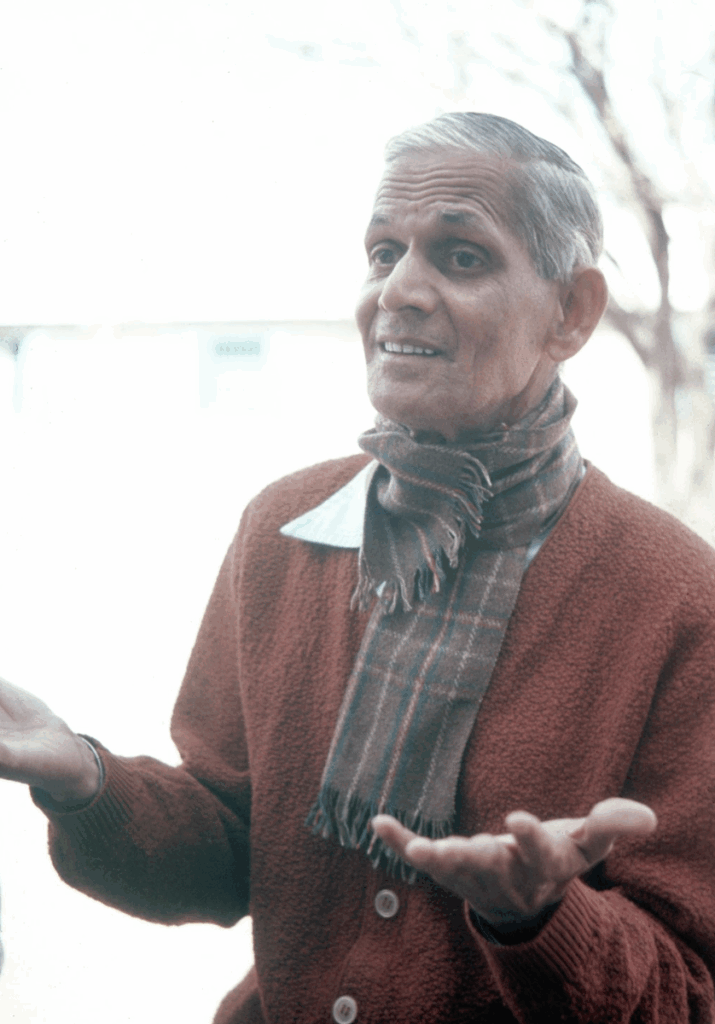
I’ve always enjoyed reading Bal Natu’s series of Conversations with the Awakener. In the Preamble to his first book, he poses the question, “Are these ‘conversations’ true or false, real or imaginary? What can I say?”1 And in his third book he answers his question: “The conversations are neither totally ‘real’ nor completely ‘fictional.’ The percentage of ‘truth’ contained in them is for readers to decide and judge. And I assure you that I will not disagree or argue with anyone about their judgement.”2
Bal avoids defining “truth” as something that can be pinned down, something that can be analysed using more words, something that can be argued about. His conversations are open, intimate as is the nature of a conversation. In his final statement he writes “I do not claim to understand all that is stated in these conversations. This book [Intimate Conversations with the Awakener] is just an attempt to share something that has moved my heart, and which I was unable to keep to myself.”3
Here, Bal’s words are not just symbols of communication but have a life of their own. His sentences are loving arms that reach out from the page of the speaker to caress the reader/listener. It is a kind of writing in which words have been nourished and made vital by the irresistible nature of love; words that the writer is “unable to keep” to himself.
Baba has said, “Love is essentially self-communicative; those who do not have it catch it from those who have it. Those who receive love from others cannot be its recipients without giving a response which, in itself, is the nature of love.”4 I think this is the case with words written with love. Such writing requires not only commitment to the craft of writing (a loving act in itself), but a commitment to living for Baba and then letting the words flow naturally as in a conversation.
The saying of Zoroaster, which Baba often quoted, “good thoughts, good words and good deeds,” is not meant, I don’t think, to be read as if thoughts, words, and deeds are separate compartments to be worked on singly but as a unified whole. And when this is done, to use Baba’s expression, we live “life at its best.” And as writing is a part of life, just like cooking, it will express that flavour which we all need for our spiritual nourishment -love.
I’m sure I am not alone when I say, as a pilgrim to Baba places like Meherazad, Meher Center, or Meher House in Sydney, that something of Baba’s presence (Reality) can be experienced. The one, same underlying atmosphere of Baba is there in each place, yet in each there is also a slight twist, a distinctiveness that is a joyful surprise to discover; some aspect of Baba that is only felt at that Place is experienced. And each pilgrim feels this differently. It is as if Baba personally reaches out to greet each pilgrim and makes them feel individually welcome. Reading Bal’s Conversations is like visiting a Baba place. There is a feeling of Baba greeting you through Bal’s words.
- Conversations with the Awakener, by Bal Natu, p. ix.
- Intimate Conversations with the Awakener, by Bal Natu, p. 88.
- Ibid
- Discourses, by Meher Baba, p. 8-9