June 27, 2026
Obedience and Strength
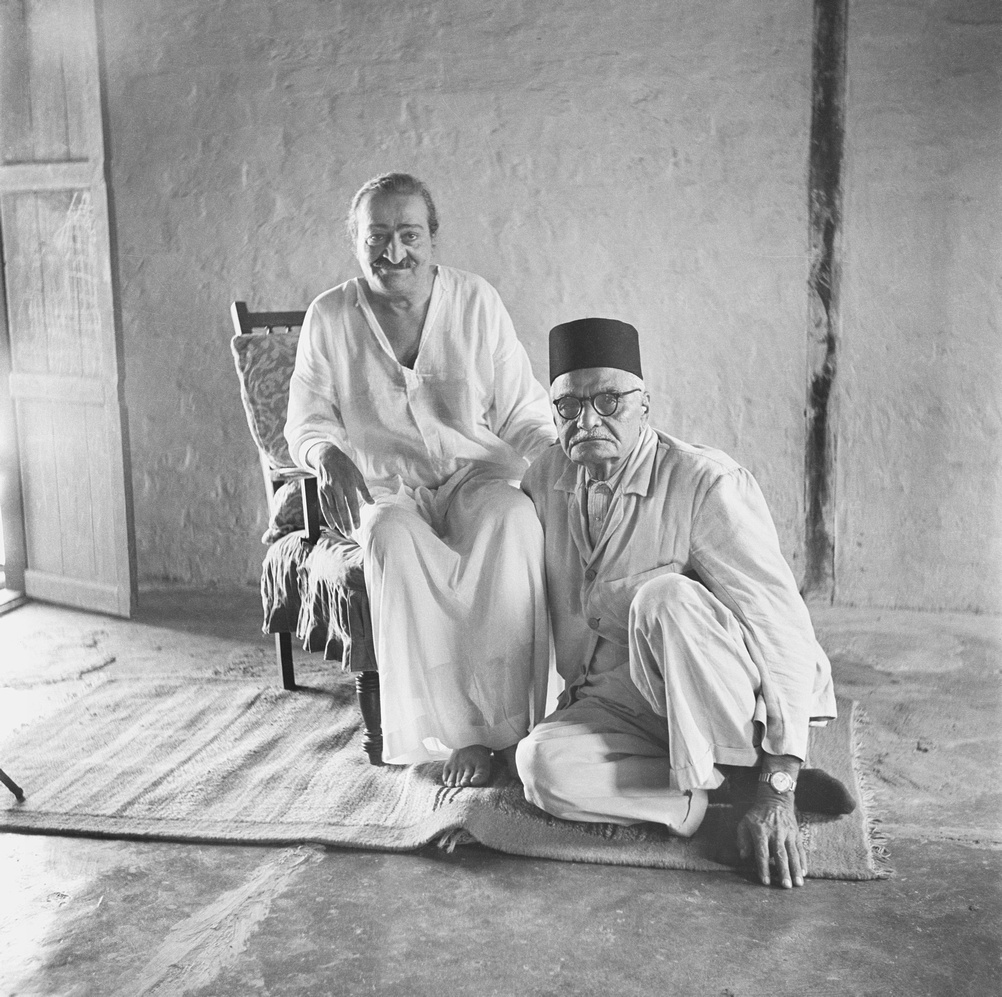
This Father’s Day, I thought of Meher Baba, the compassionate father. The “soft like butter and hard like steel”[1] aspects of fatherhood that Baba represents in our daily lives with Him. Naturally, I also thought of His father, Sheriarji, with his softer nature and otherworldly pursuit of God. Then, another contrasting figure sprang to mind. Papa Jessawala – the father of Eruch and devout disciple of Meher Baba.
I remembered reading about Baba’s acknowledgement of Papa’s role in raising Eruch to be physically and mentally strong to tolerate discomfort without complaint, a quality that would become very useful for Eruch as Baba’s right-hand man. Papa inculcated routines and habits in his son Eruch which proved invaluable in Eruch’s subsequent life with Baba – habits such as not having snacks between meals each day; no rest during the day; intensity and thoroughness in work and responsibilities. Baba once praised Papa for his excellent bringing-up of Eruch, saying: “You saved Me all the trouble and effort I would have had to undertake when Eruch came to Me.” But Baba would also tease Papa, pointing out the expense He would have had to meet if Papa had agreed to give Him Eruch as a boy. “See, you trained him, and I get all the benefits!” [2]
Baba’s sign for Papa Jessawala was shooting a gun. And His nickname for him was the “pistol.”
Behramshah Jessawala (Papa) was a self-made man, very disciplined and fiery. He was scrupulous, dedicated and very honest. With such a core foundation, it does not come as a surprise that he became the first Indian in British India to attain the very high government position of the Chief Inspector of Boilers (CPB) in Nagpur. He held that job, defying the rampant corruption presented to him at his inspections, until the 1940s when the family decided to live directly under Meher Baba’s supervision.
His son Meherwan writes, “He was a nice, jovial person, but at the same time he was very strict with the upbringing of his children. He was often teased by his friends because he was such a strict disciplinarian, and he immediately noticed anything that was not as it should be. It was a trait that Eruch was endowed with as well, whether genetically or not, I don’t know.”[3]
Papa first met Baba in 1927. His wife Gaimai was completely dedicated to Baba and also held the great honor of being told by Baba that she would be the mother of the Avatar in His next advent.
Papa had purchased Mary Lodge in Nagpur sometime in the early 1920s and developed the house and grounds into quite a palatial estate to provide a comfortable home for himself and his family. It was also a place where Baba came and gave darshan. When Meher Baba called the family to “leave all and come to Him” in August, 1938, Mary Lodge and its contents were sold for a fraction of their worth. Papa completed his last year for service and returned to be with Baba full time the following year at His ashram in Bangalore.
In the introduction to Meherwan Jessawala’s memoir, Mehera Kerawalla-Arjani writes, “..Papa Jessawala worked tirelessly and uncomplainingly for Baba, forsaking all ambitions for himself and his children once Baba told the family to leave all and come to be with Him.”[4]
One of his first jobs was to bring a sixth planer mast to the Links, Baba’s compound in Bangalore, along with Kaka and Adi Sr. Papa was surprised at Baba’s suggestion for him to go since Adi and Kaka were more experienced with masts. Baba said, “I wish you to take part in this mast work. I have work to do through you. Even if a mast bites you, don’t be afraid.” After a lot of difficulty, Papa was able to procure the mast who slapped and cursed Papa all the way back. Papa declared, “Here is your mast! We were only able to bring him after the greatest trouble, so that you could do your work with him.”[5]
In 1940, Papa was sent to Ankai Cave to be the supervisor and spokesman for four others: Gustadji, Pleader, Savak, and Swami Bhabananda who were all to be silent for a whole year while obeying Papa. To Papa, Baba said, “Your austerities on the mountain will result in your spiritual progress.”
The four soon became “prisoners of the pistol” having to wake up at 4:00 am to keep him company and deal with the lack of basic provisions like water, etc, all while being silent! Gustadji, who was used to being silent, was so fed up with Papa’s regimen that he wrote to Baba, “Dear Baba, I was with Sai Baba; I was with Upasani Maharaj; I was with Babajan; and now I am with you, Meher Baba. But I have never come across a ‘Master’ like Papa!”[6]
A glimpse into Papa’s absolute obedience is seen in 1944 when after a program at Bindra House (the home of Jessawala family in Poona), Baba asked Papa to keep watch near the gate and prevent anyone from coming in. When Baba’s close disciple and friend Ghani came, Papa did not allow him to go in. Baba enjoyed the scene from the window. He then called both of them inside and said to Papa, “I am very happy with you. You do your duty 100 percent. This is the way to obey Me. Even if a king comes, don’t allow him to enter!” And then much to Ghani’s chagrin, Baba winked at Ghani and said to Papa, “Only you obey me perfectly. You are one man who can be trusted.”
After sending another lover, Dhake, away, Papa stood reassured at the gate. But then Gadekar and his wife came. Instead of sending them away Papa informed Baba of their arrival. Baba said, “I had complete trust in you that you would not allow even a king to enter. How has Gadekar bewitched you?”[7]
All ended well when Baba chose to see the couple, only to use Papa’s temper, obedience and peculiar ways for His purpose, all in good humor.
In 1959, Papa breathed his last at Bindra house with Baba’s name on His lips. Next morning Baba went and sat by Papa’s bed and put on his hat. Shortly afterwards, Baba drove with Eruch to a spot on the road where together they watched Papa’s funeral procession as it drove to the Tower of Silence. In this way, Baba kept His nazar on the last moments of Papa’s physical form. After watching the procession for a few minutes, Baba remarked, “The work is completed.”
He then asked Eruch, “What happens after you eat?”
Eruch said, “You digest your food and then defecate the waste.”
Baba explained, “The body is to the soul as the waste is to the food. The body eventually becomes the excreta of the soul. Death is the process by which the soul excretes the human body. How do you feel after you go to the toilet?”“Relieved and happy.”
“The soul, too, feels happy and relieved to be free of the body. That is how one should feel about anyone’s death.” Later, Baba remarked how fortunate Papa was that, even at this final stage, Baba’s glance had fallen on him.
Taking Papa’s hat with Him, Baba returned to Bindra House for lunch with Eruch and his family, and then proceeded to Guruprasad. All at Bindra House were as calm as if nothing had happened. This was Baba’s love-game and His gift to His lovers. They had faith in Baba’s words that everything in the world is unreal and they remained unaffected. Baba said “Papa has come to Me forever.”[8]
[1] As Only God Can Love, by Darwin Shaw, p.197
[2] Over the Years with Meher Baba, by Bill LePage, p.15
[3] My Life with Meher Baba, the Avatar of the Age, by Meherwan B. Jessawala, pp.31-32
[4] Ibid, p.15
[5] https://trustmeher.org/meher-baba-close-disciples/men/behramshah-jessawala-pistol
[6] Ibid
[7] Ibid
[8] Lord Meher, Online Edition, by Bhau Kalchuri, p.4551